Creating a safe and engaging home for a box turtle starts with the right habitat components and a balanced diet. This guide highlights five carefully chosen products designed to support humidity, substrate quality, enrichment, and proper nutrition for box turtles. Each item is selected for reliability, availability, and relevance to a typical box turtle setup in American homes.
| Product | Brand | fits Box Turtle Needs |
|---|---|---|
| Gourmet Box Turtle Food | Zoo Med | Diet enrichment with vitamins and minerals |
| Sphagnum Moss Substrate | Sukh | Humidity retention and nesting material |
| Coconut Fiber Substrate | ZeeDix | Absorbs moisture and odors; bedding |
| Buffet Blend Box Turtle Diet | Fluker’s | Varied diet with proteins and vegetables |
| Tortoise Habitat Indoor/Outdoor | Aivituvin | Durable enclosure with flexible placement |
Gourmet Box Turtle Food For Balanced Diet

Zoo Med’s Gourmet Box Turtle Food provides enrichment through a natural, protein-rich mix that includes dried mealworms, mushrooms, and strawberries. This all-natural formula contains essential vitamins and minerals and is free from artificial colors, flavors, or preservatives, supporting a healthy appetite and balanced nutrition for box turtles. Feeds can be used as a primary diet or as a supplement to fresh greens, fruits, and leafy vegetables for a varied feeding regimen. A ready-made option helps maintain dietary consistency in captivity.
Sphagnum Moss For Humidity And Nesting

The Sphagnum moss from Sukh provides excellent moisture retention, helping to stabilize humidity levels in enclosures. This moss can assist with shedding and offers soft, natural substrate for hiding spots and nesting material. While moss improves humidity, it should be used as part of a broader substrate strategy, especially since peat moss or moss alone is not a full substrate for all reptile enclosures. It’s particularly beneficial for box turtles in environments requiring higher humidity and gentle, burrow-friendly surfaces.
Coconut Fiber Substrate For Bedding
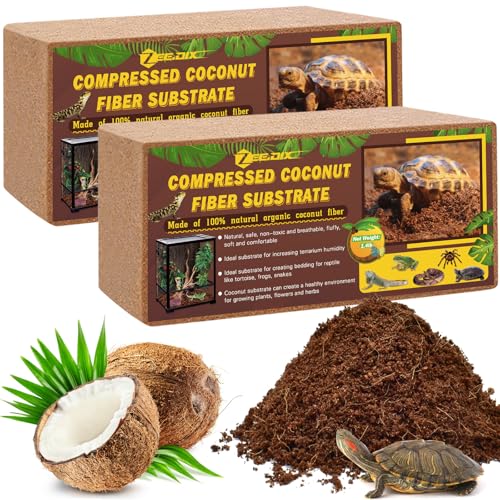
ZeeDix offers a 2-pack of 100% natural coconut fiber substrate designed for reptile bedding. This substrate is breathable, biodegradable, and low in electrical conductivity and pH balance, aiding in moisture management and odor control. It is suitable for habitats requiring humidity while providing a comfortable resting surface. It can be combined with other substrates to tailor the enclosure’s feel to box turtles. The product ships as ready-to-use bedding, with notes on substrate management for optimal conditions.
Buffet Blend Box Turtle Diet

Fluker’s Buffet Blend combines freeze-dried strawberries, dried mealworms, and freeze-dried green peas with vitamin-enriched pellets. This mix provides a complete and balanced meal with a variety of textures and flavors, supporting protein, fats, and micronutrients needed for box turtles. The blend helps ensure dietary variety, which can promote healthier appetite and digestive function when paired with fresh produce, leafy greens, and appropriate hydration.
Aivituvin Tortoise Habitat For Realistic Living

The Aivituvin tortoise habitat is a wooden enclosure designed for indoor use, with detachable legs for flexible placement and an adjustable heat lamp stand. This multipurpose habitat is marketed as suitable for tortoises, turtles, and other small animals, featuring a rotatable roof and a convenient layout for feeding and cleaning. While framed for general use, the design supports box turtles by providing an elevated basking area, safe enclosure materials, and accessible maintenance options. It can be configured to meet humidity and lighting needs when paired with proper substrates and lighting.
Buying Guide: Key Purchase Considerations And Comparisons
Choosing a habitat for box turtles involves balancing humidity, substrate hygiene, space, lighting, and diet variety. Here are the main considerations to guide decisions:
- Humidity and Substrate: Box turtles thrive with stable humidity. Combine moisture-retentive substrates such as sphagnum moss and coconut fiber with a drift of larger, safe particulate materials to prevent compacting. Avoid substrates that mold easily or cause respiratory issues.
- Enclosure Size And Setup: Ensure the enclosure provides room for basking, foraging, and burrowing. The structure should be sturdy, escape-proof, and easy to clean. For indoor use, consider modular options or platforms that allow adjustable basking lamps.
- Lighting And Heating: A UVB/ UVA lamp is essential for calcium metabolism and overall health. A heat lamp or basking area should create a gradient so the turtle can regulate its body temperature.
- Diet Variety: A diet featuring a mix of greens, vegetables, insects, and fortified pellets supports balanced nutrition. Include fresh produce alongside formulated foods to mimic natural foraging patterns.
- Maintenance And Longevity: Regular cleaning reduces bacterial growth and odors. Substrate replacements and safe transitions when upgrading habitats help reduce stress for the animal.
- Safety And Compatibility: Many turtle enclosures are designed for a range of reptiles; verify that materials and finishes are non-toxic and appropriate for box turtles. Ensure ventilation is adequate to prevent mold and respiratory issues.
- Budget And Availability: Plan for ongoing costs related to food, substrate, and replacement bulbs. Selecting versatile products can simplify maintenance and long-term care.
In summary, an ideal box turtle habitat blends a moisture-friendly substrate with a reliable feeding plan and a safe, adaptable enclosure. The combination of Gourmet Box Turtle Food, Sphagnum Moss, Coconut Fiber Substrate, Buffet Blend Diet, and a solid habitat like the Aivituvin model offers a practical, balanced setup for many box turtles in American homes.