Cat flap doors provide convenient, secure access for cats and small dogs while helping to insulate your home. The following reviewed options cover a range of sizes, locking configurations, and installation scenarios—from interior door setups to windows and exterior walls. Each product below emphasizes durability, weather resistance, and simple operation to keep both pets and households comfortable.
| Product | Brand | Size (Outer / Inner) | |
|---|---|---|---|
| Depets Large Cat Door | Depets | 9.25″ x 9.92″ / 7.08″ x 7.48″ | 4-way locking; suitable for doors and windows |
| Thin Cat Door for Windows | Lessmon | 7.76″ x 7.5″ / 6.7″ x 6.3″ | 4 lock modes; ultra-thin profile |
| Depets Medium Cat Flap Door | Depets | 7.5″ x 7.8″ / 5.9″ x 6.3″ | 4-way lock; lightweight and stealthy |
| PetSafe Interior 2-Way | PetSafe | Standard interior size; fits 1.5–2″ thick doors | 2-way lock; privacy and access control |
| CEESC Extra Large Cat Door | CEESC | 9.8″ x 11″ / 7.9″ x 8.7″ | 4-way lock; weatherproof exterior seal |
The products selected here focus on varied door types (wooden doors, walls, windows), weight and waist measurements for pets, and locking configurations to suit homes with both busy households and pets that require restricted access at certain times. Read on for detailed, objective summaries of each option, including installation notes and how their features translate to daily use.
Depets Large Cat Door With 4-Way Lock
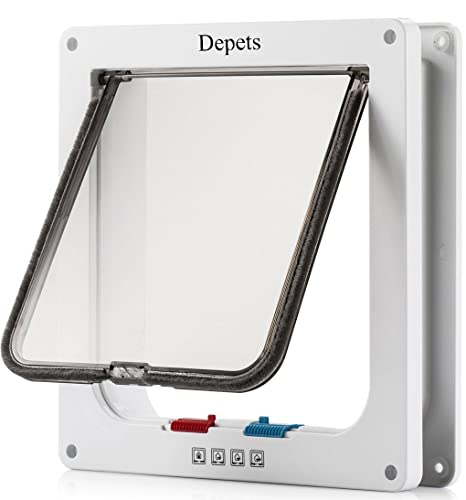
Outer dimensions measure 9.25″ x 9.92″ with an interior opening of 7.08″ x 7.48″, designed for pets under roughly 17.64 pounds and a waist circumference under 23.62 inches. The four independent modes—swing out only, in only, both in and out, and fully locked—allow tailored control of pet traffic, and the installation kit supports doors, windows, cupboards, and similar surfaces. This model’s weatherproof construction helps minimize drafts, making it suitable for exterior doors or entry points that see variable weather. The manufacturer provides installation instructions to aid a straightforward setup.
Features include: four locking modes, outer size 9.25″ x 9.92″ x 2.16″ and inner opening 7.08″ x 7.48″, cut-out approximately 7.7″ x 8.3″. It is designed for cats under a specific weight and waist measurement, and the product emphasizes ease of installation across various door types.
Lessmon Thin Cat Door For Windows

This slim, 0.78-inch-thick panel cat door is designed for windows, sliding doors, or thin walls, minimizing the need for extensive modifications. With four locking modes (Free In & Out, Fully Locked, Out Only, In Only), it offers controlled access while reducing the chance of intrusions. The outer size is 7.76″ x 7.5″ and the flap opening is 6.7″ x 6.3″, supporting pets with waists up to around 19.8 inches. The installation is described as requiring no tunnel or substantial cutouts, making it a practical choice for rental homes or temporary setups.
Key points include a compact footprint, no heavy tunneling, and a focus on quiet operation as pets pass through the flap. The design prioritizes ease of use for both cats and small dogs and aims to deliver a balance between accessibility and security.
Depets Medium Cat Flap Door With 4 Way Lock

The medium model measures outer 7.5″ x 7.8″ x 2″ with an inner opening of 5.9″ x 6.3″ and a cut-out near 6.3″ x 6.7″. It supports cats up to about 15 pounds and is suitable for walls or doors up to 50 mm thick. Features include four locking modes and a transparent flap so pets can see through, reducing hesitation at the door. An exterior screen provides weather resistance, while a brush strip helps dampen noise when the flap closes. This option aims at interior access with robust control over entry and exit points, promoting quiet operation and simple maintenance.
Use cases include bedrooms, kitchens, and other interior spaces where you want to deter pets from wandering into restricted areas while maintaining accessible routes to litter boxes or feeding areas.
PetSafe Interior 2-Way Locking Cat Door

The PetSafe interior door model focuses on convenient movement between rooms. It offers two-way locking, helping to minimize scratching around feeders or litter boxes while keeping others out of private spaces. The translucent flap reduces visibility of the interior spaces from the outside and helps deter curious pets from lingering at the threshold. Installation is described as quick and DIY-friendly, compatible with most interior doors that are 1.5 to 2 inches thick. This option is well-suited for homes needing controlled access within the house rather than external entry points.
Highlights include: two-way lock, durable plastic flap, and a straightforward installation kit with a template. The design emphasizes pet movement between rooms while maintaining household privacy and cleanliness, making it a steady choice for multi-room layouts.
CEESC Extra Large Cat Door With 4-Way Lock
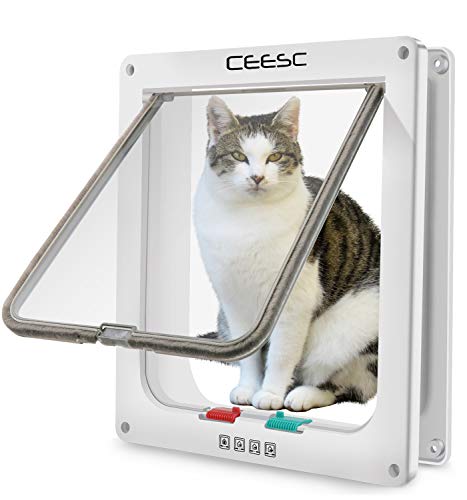
The CEESC extra-large cat door suits larger cats or small dogs, featuring outer size 9.8″ x 11″ and inner 7.9″ x 8.7″ with a 4-way switch. It’s designed for doors or thin walls and supports pets up to about 27.54 pounds, with a waist limitation under 24.8 inches. The door includes a transparent flap for visibility and an exterior rain seal to improve weather resistance. A brush strip helps dampen closing noise, contributing to a quieter household experience. This model is a robust choice for homes needing a larger passage with weather protection for outdoor use.
Considerations include: size capacity, weather seal integrity, and the reliability of four locking modes to manage pet access across seasons and home layouts. The product is intended to provide secure access while accommodating larger pets that require more space at the flap opening.
Buying Guide: Key Purchase Considerations And Comparisons
- Pet size and weight: Select a door with an inner opening large enough for your cat or small dog and a waist measurement within your pet’s size range. Larger openings reduce discomfort for bigger cats, while smaller openings enhance energy efficiency and security for smaller pets.
- Locking modes: Four-way or two-way locking options grant flexible control over pet access. Consider households with multiple pets, dogs, or seasonal visitors, and whether you need the option to completely seal off access at certain times.
- Door type compatibility: Check whether the flap fits interior doors, exterior doors, windows, or walls. Some models emphasize minimal installation with no tunnel, while others provide a robust frame for full installation on doors or walls.
- Weather resistance: For exterior use, look for weatherproof flaps, rain seals, and brush strips to minimize drafts and noise. Exterior installations benefit from reinforced seals and durable materials to withstand temperature changes and humidity.
- Visibility and comfort: A transparent or tinted flap can reduce pet anxiety by letting them see through the door. Consider whether a user-friendly design reduces noise and encourages consistent use.
- Material and durability: ABS plastics and sturdy frames are common. Assess whether the flap material resists wear from claws and is easy to clean, especially in households with frequent usage or exposure to the elements.
- Installation effort: DIY installation varies by door thickness and surface. Some products specify compatibility with doors up to 50 mm or 2 inches thick, while others emphasize no-cut or minimal-cut installations for windows or walls.
- Maintenance and replacement parts: Replacement flaps or replacement parts should be readily available or easy to source. Consider whether a model uses standard sizes for flaps in case of wear or damage.
- Aesthetic fit: Colors, finishes, and frame designs can be chosen to complement interior decor or exterior wall finishes, helping the flap blend in rather than stand out.
- Safety and privacy: For households with curious children or multiple pets, ensure the door’s design minimizes entrapment and provides secure closure when needed, reducing drafts and preventing accidental escapes.
Across these options, the best choice depends on your home layout, pet size, and whether you need interior or exterior access. If you prioritize precise control and weather resistance, models with four-way locking and exterior seals are strong candidates. If you value minimal installation and interior room accessibility, consider doors with easy DIY installations and two-way locking or thinner frames for windows and doors.