Choosing a choke, pinch, or martingale collar for a large dog requires balancing effective training with safety and comfort. The right collar can help manage pulling, improve leash manners, and support humane correction when used correctly. This guide highlights five widely used, reputable options designed for large dogs, emphasizing durability, adjustability, and safety features. Read on to compare top picks and learn essential buying considerations to match your dog’s size, temperament, and training needs.
| Product | Brand | Type | Notes |
|---|---|---|---|
| Prong Collar for Dogs, Dog Training Collar (Two Extra Links) | Safiman | Prong/Choke | Two extra links; front buckle design; adjustable |
| Supet Prong Collar for Dogs | Supet | Prong/Choke | One extra link; quick release |
| Mayerzon No Pull Dog Collar | Mayerzon | Martingale | Hidden design; heavy duty nylon |
| Aheasoun Prong Collars for Dogs | Aheasoun | Prong/Choke | Stainless steel; rubber tips for safety |
| Monstoyo Martingale No Pull Collar | Monstoyo | Martingale | Reflective; nylon with inner chain |
Note: Selection focuses on collars suitable for large dogs, emphasizing humane framework, build quality, and practical adjustability. Each option supports training goals while prioritizing safety and comfort during walks and corrections.
Safiman Prong Collar For Large Dogs
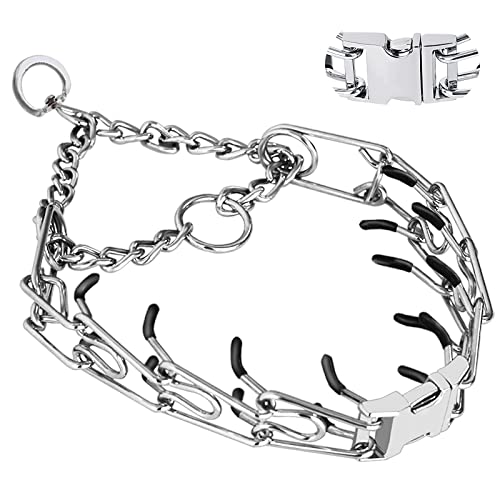
The Safiman Prong Collar is designed to aid communication during walks, using a set of evenly spaced prongs that distribute corrective pressure around the neck. The collar emphasizes a front quick-release buckle for easy handling, with eight directional links arranged to maintain consistent contact from any angle. Its round head, smooth surface, and rubber-covered tips aim to minimize discomfort while providing effective behavioral cues. This model is adaptable for a wide range of large breeds and can be expanded with extra links for a precise fit.
Supet Prong Collar For Dogs

The Supet Prong Collar provides corrective pressure to guide training while protecting airway and neck areas. It features a quick-release buckle and a design that mimics natural mother-dog correction. The collar’s smooth, rounded profile is intended to minimize harm during use, helping reduce pulling and encourage calmer walking behavior when used as part of a structured training routine. Users should follow sizing instructions and adjust the links as needed to fit a large dog’s neck securely.
Mayerzon No Pull Dog Collar

The Mayerzon No Pull Collar uses a patented martingale design hidden inside the collar, providing a controlled tightening mechanism without looking like a traditional chain. This helps maintain a more normal appearance, which some handlers prefer for training. The collar emphasizes durability with heavy-duty nylon and a sturdy D-ring, designed to withstand pulling. It aims to be effective for exercise, walking, and training sessions, especially for dogs that tend to pull or lunge.
Aheasoun Prong Collars For Dogs
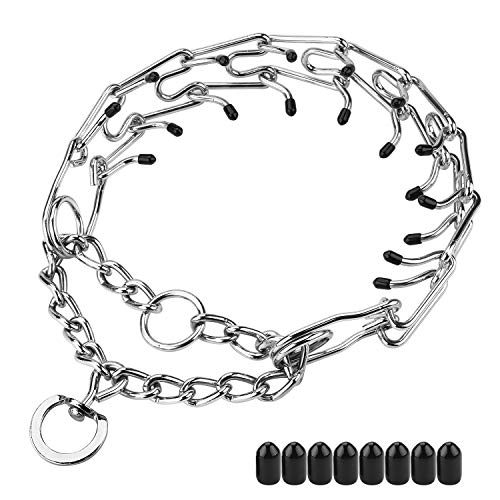
The Aheasoun Prong Collar is a stainless-steel, adjustable option designed for large, medium, and small dogs. It uses rubber-tipped prongs to cushion the neck while applying even pressure for corrections. The collar emphasizes safety with a rubber tip guard and a 23.6-inch maximum perimeter, allowing a snug fit for many large breeds. It is compatible with training routines that require controlled, steady correction rather than aggressive punishment.
Monstoyo Martingale No Pull Collar

The Monstoyo Martingale No Pull Collar combines a hidden martingale mechanism with a full surrounding soft neoprene pad and nylon outer strap. Built to be durable and comfortable, it distributes pressure evenly to discourage pulling, while the reflective elements on the strap aid visibility during evening walks. This design aims to offer a balanced training experience, making it suitable for larger dogs that require consistent guidance without harsh corrections.
Buying Guide: Key Purchase Considerations
When evaluating choke, prong, or martingale collars for large dogs, consider fit, safety, training goals, and maintenance. Below are perspectives to help choose the right tool for your needs.
- Sizing and fit: Large dogs require collars with adjustable lengths and proper neck measurements. Favor collars with multiple link adjustments or sizes to ensure a snug, secure fit just below the ears. A collar that slides or loosens during walks is less effective and may cause safety concerns.
- Intended training outcomes: Prong and martingale collars provide corrective pressure, while flat-buckle or front-clip options may focus more on control. Align your choice with your training plan, consulting a professional trainer if possible.
- Safety features: Look for rounded or rubber-tipped prongs, smooth contact surfaces, and durable materials that prevent neck injuries. Rubber caps or protective tips can reduce the risk of harm during adjustments or corrections.
- Durability and materials: Stainless steel prongs, heavy-duty nylon, and chrome-plated alloys withstand stronger pulls and daily wear. Examine the construction quality, rust resistance, and ease of cleaning.
- Ease of use: Quick-release buckles and simple sizing help with frequent adjustments. Front-entry or front-release designs may offer more secure handling when guiding a large dog.
- Maintenance: Clean prongs and joints after outdoor use to prevent buildup. Regular inspection for wear helps catch loose links or frayed materials before it causes issues.
- Ethical considerations: Use training collars as aids, not as punitive devices. Pair collar use with positive reinforcement, consistent routines, and appropriate exercise to ensure humane training outcomes.
- Alternatives: For some dogs, harnesses or head collars may be more suitable. Consider all options and seek veterinary or trainer advice if your dog has health or behavioral concerns.
These factors help shoppers balance effectiveness with safety, ensuring the chosen collar supports training without compromising the dog’s well-being. The listed products cover a range of designs and strengths to accommodate various large breeds and training approaches.