Choosing the right diet dog food for pugs can help manage weight, support digestion, and maintain a healthy coat. The following picks are tailored for small breeds with a focus on weight control, sensitive stomachs, and breed-specific needs. Below, you’ll find concise product summaries and a buying guide to compare options side by side.
| Product | Brand | Key Benefit |
|---|---|---|
| Hill’s Science Diet Light (Small Kibble) | Hill’s Science Diet | Low calories with L-Carnitine for weight support |
| Hill’s Science Diet Sensitive Stomach & Skin (Small Kibble) | Hill’s Science Diet | Digestible ingredients and prebiotic fiber for gut health |
| Royal Canin Breed Health Nutrition Pug Adult Dry | ROYAL CANIN | Breed-specific kibble for Pug muzzle and coat support |
| Hill’s Science Diet Adult 1-6 Premium Nutrition (Small Kibble) | Hill’s Science Diet | Lean muscle support and easy digestion |
| Hill’s Science Diet Adult 7+ Premium Nutrition (Small Kibble) | Hill’s Science Diet | Senior energy and immune support with balanced minerals |
Hill’s Science Diet Light For Small Breeds

Hill’s Science Diet Light is designed to support weight management for small-breed dogs. It features low calories with L-Carnitine to promote ideal body weight, combined with high-quality protein and natural fibers to help satisfy hunger between meals. Omega-6 fatty acids and vitamin E work to maintain skin and coat health. This option is suitable for adult pugs that require portion control without sacrificing nutrition.
Hill’s Science Diet Sensitive Stomach & Skin

This formula is crafted for dogs with sensitive stomachs and skin. It uses a precise balance of highly digestible ingredients and prebiotic fiber to support gut health and a balanced microbiome. Omega-6s and vitamin E help promote a healthy coat, making it a practical choice for pugs with sensitive digestion or skin concerns.
Royal Canin Pug Adult Dry Food
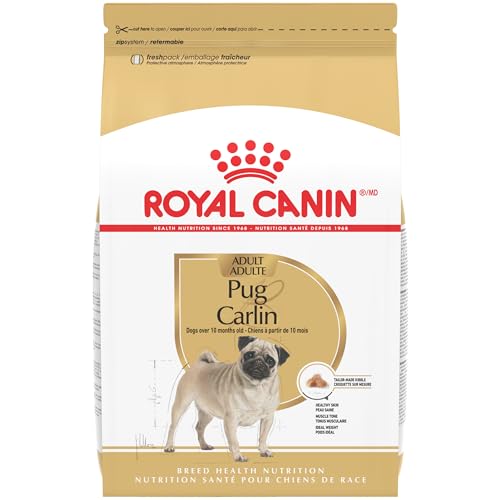
Royal Canin’s Breed Health Nutrition Pug Adult formula is tailor-made for purebred pugs aged 10 months and older. The cloverleaf kibble shape accommodates a pug’s short muzzle, promoting easier picking and chewing. EPA and DHA from fish oil support skin health and coat care, making this a breed-centric option for pugs with skincare or coat concerns.
Hill’s Science Diet Adult 1-6 Premium Nutrition

This premium nutrition variant for adults 1-6 features high-quality protein to support lean muscles and natural fibers for healthy digestion. It also includes omega-6 fatty acids and vitamin E to promote a healthy skin and coat, making it suitable for pugs needing balanced nutrition with a focus on digestion and appearance.
Hill’s Science Diet Adult 7+ Premium Nutrition

Designed for senior dogs, this formula emphasizes energy support and immune system health while maintaining easy-to-digest ingredients. With balanced minerals for heart and kidney health, plus omega-6s and vitamin E for skin and coat, it helps pugs during their senior years stay active and comfortable.
Buying Guide
- Age and life stage: Pugs may benefit from formulas targeted to puppies, adults, or seniors. Consider whether your pug is a growing puppy, a normal adult, or a senior with changing energy needs.
- Weight management: For pugs prone to obesity, choose options with controlled calories and added L-Carnitine or lean protein to support weight goals without sacrificing fullness.
- Digestive health: If your pug has a sensitive stomach, look for foods with easily digestible ingredients and prebiotic fibers to support gut microbiota.
- Skin and coat: Pugs often have sensitive skin; formulas with omega-6 fatty acids and vitamin E can promote a healthy coat and reduce itchiness.
- Breed-specific considerations: Some brands offer pug-specific formulas designed to accommodate muzzle shape and chewing patterns, aiding easier consumption and digestion.
- Size and kibble: For small breeds like pugs, small or miniature kibble improves palatability and ease of chewing.
- Allergies and sensitivities: If your pug has known allergies, check for limited-ingredient options or grain-sensitive formulas, and always consult a veterinarian.
- Transitioning foods: When switching diets, gradually mix the new food with the current one over 7-10 days to minimize digestive upset.