As puppies begin to transition from mother’s milk to solid foods around four weeks old, choosing the right nutrition and feeding tools becomes crucial. This guide highlights suitable weaning formulas, age-appropriate dry and wet puppy foods, and supportive feeding gear to help ensure steady growth and healthy development. The selections focus on gentle transition options, digestibility, and ingredients that align with early developmental needs.
Summary Table of Selected Products
| Product | Brand | Format | Key Benefit |
|---|---|---|---|
| Esbilac 2nd Step Puppy Weaning Food | PetAg | Powdered Formula | Easy-to-digest, DHA for brain development |
| Esbilac 2nd Step Puppy Weaning Food | PetAg | Powdered Formula (5 lb) | Supports transition from milk to solid food |
| Puppy Morsels in Sauce | Pedigree | Wet Food Pouches | Soft texture, DHA for brain development |
| Puppy Dry Food Grilled Steak and Veggies | Pedigree | Dry Food | High-quality protein and balanced minerals |
| Blue Buffalo Baby BLUE Small Breed | Blue Buffalo | Dry Food | Real chicken first, DHA for cognitive development |
Note: When starting a weaning plan, consult a veterinarian for individualized guidance. Always provide fresh water and monitor puppy appetite, stool consistency, and energy levels during the transition.
Esbilac 2nd Step Puppy Weaning Food (14 oz)

The Esbilac 2nd Step formulation is designed to closely follow lactation options such as mother’s milk or goat’s milk-based products. It is formulated to gently introduce solid foods to puppies around 4-5 weeks old and supports growth with natural milk proteins. This product is easy to lap from a bowl when mixed with water or formula to a smooth consistency, promoting a smooth transition from milk to foods. It contains vitamins, minerals, DHA, and trace nutrients for developing vision and cognition, while remaining highly digestible.
Esbilac 2nd Step Puppy Weaning Food (5 lb)

This larger 5-pound option provides an economical supply for households with multiple weaning puppies or ongoing transition needs. Like the 14-ounce version, this formula supports a gradual shift from nursing to solid foods, using a natural milk protein base for superior digestibility. Its DHA and minerals contribute to healthy brain development and overall growth as puppies begin to explore more solid textures.
Pedigree Puppy Morsels in Sauce Wet Food

This wet food option offers a soft, easily chewable texture ideal for puppies around 4 weeks and newer to solid food. Enriched with DHA to support brain development and calcium for healthy teeth and bones, the recipe is formulated to serve as a complete and balanced meal or as a palatable topper for dry puppy foods. Its gentle flavors are designed to entice a young puppy’s appetite while meeting essential nutrient needs.
Pedigree Dry Puppy Food Grilled Steak and Veggies

As a next step in the transition, this dry puppy food provides a solid protein base with a blend of vitamins, minerals, and amino acids to support healthy growth. The grilled steak and vegetable flavor is designed to appeal to a developing palate, supporting continued intake while contributing to muscle development and immune health. The formula emphasizes a balanced nutrient profile suitable for growing puppies.
Blue Buffalo Baby BLUE Small Breed Dry Puppy Food

Designed for small breed puppies, this dry food centers on real chicken as the first ingredient and includes DHA to support cognitive development. The formula emphasizes natural ingredients with LifeSource Bits that provide antioxidants for immune support. It offers a development-focused nutrition profile that aligns with the needs of small-breed puppies entering more advanced stages of weaning and growth.
Blue Buffalo Life Protection Formula Puppy Dry Food with DHA

This option emphasizes premium natural ingredients without poultry by-products, corn, wheat, or soy. The presence of DHA and ARA supports cognitive function and retinal health, which can be advantageous during the early, rapid development period. While more commonly used after initial weaning, it can be appropriate for gradually expanding the puppy’s diet as recommended by a veterinarian.
Pedigree Puppy Food Morsels in Sauce Wet Pouches
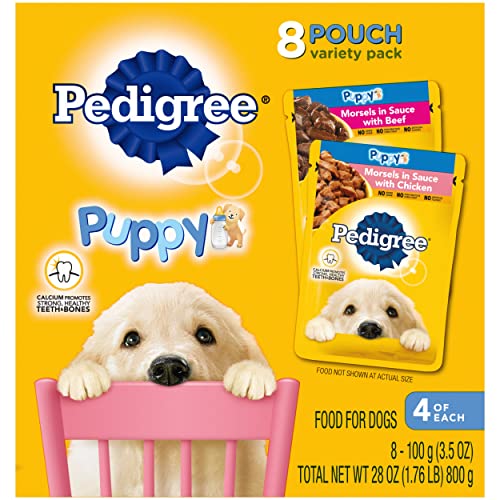
Another Pedigree wet option, these pouches deliver a juicy, easy-to-chew texture with a balanced nutrient profile for puppies. The inclusion of DHA supports developing brain health, while the moisture content can aid hydration and digestion as puppies adjust to solid foods. This choice can be used as a complete meal or mixed with dry foods to vary texture and flavor during weaning.
Buying Guide: Key Purchase Considerations For Weaning Puppies
- Stage suitability: Choose formulas designed for 4-8 week old puppies or those labeled for weaning and transition to solid foods. Start with a gruel-like consistency and gradually thicken as the puppy learns to chew.
- Digestibility: Look for natural milk proteins, easily digestible ingredients, and proteins that support growth without overstressing the immature gut. DHA and essential fatty acids are beneficial for brain development.
- Texture progression: Begin with wet or soft foods, then introduce dry kibble to develop chewing and dental health. A combination approach can help with palate development and nutrient balance.
- Multi-stage nutrition: A plan that includes an initial weaning formula (or milk replacer) followed by transition foods (wet and dry) often yields the best results in growth and temperament.
- Allergen considerations: Avoid common fillers and artificial additives. If family history suggests sensitivities, opt for single-protein options and consult a vet for any signs of intolerance.
- Feeding tools: For a smooth transition, pair foods with appropriate feeding bowls that prevent tipping and ensure easy access to food and water. Stainless steel bowls are durable and easy to clean.
- Veterinary guidance: Regular check-ins during the weaning period help tailor portions, monitor growth, and adjust formulas as needed for health and development.
- Portion control: Start with smaller, more frequent meals and gradually increase portion size as the puppy grows. Monitor weight gain and energy levels to avoid overfeeding or underfeeding.
- Hydration: Always provide fresh water. Wet foods contribute to hydration, but puppies should still have continuous access to clean water.
- Transition pace: If a puppy shows reluctance to switch, mix formula with a small amount of the new food, then steadily increase the new food portion over several days to minimize stress and appetite loss.
The selections above cover a range of weaning strategies—from milk-based transitional formulas to early-stage dry and wet puppy foods—designed to support healthy growth and cognitive development in 4-week-old puppies. Always adjust choices based on individual puppy needs and veterinary recommendations.